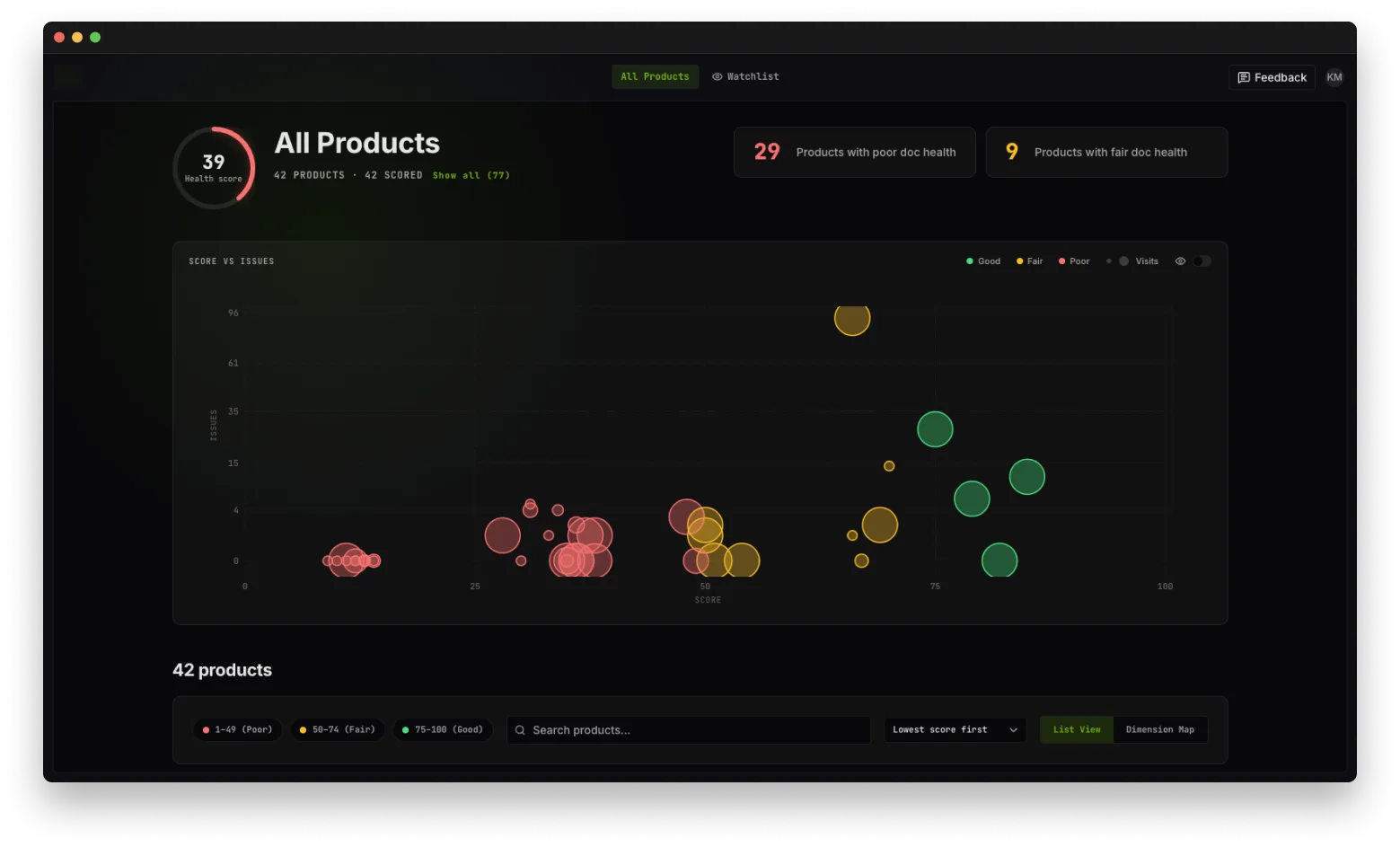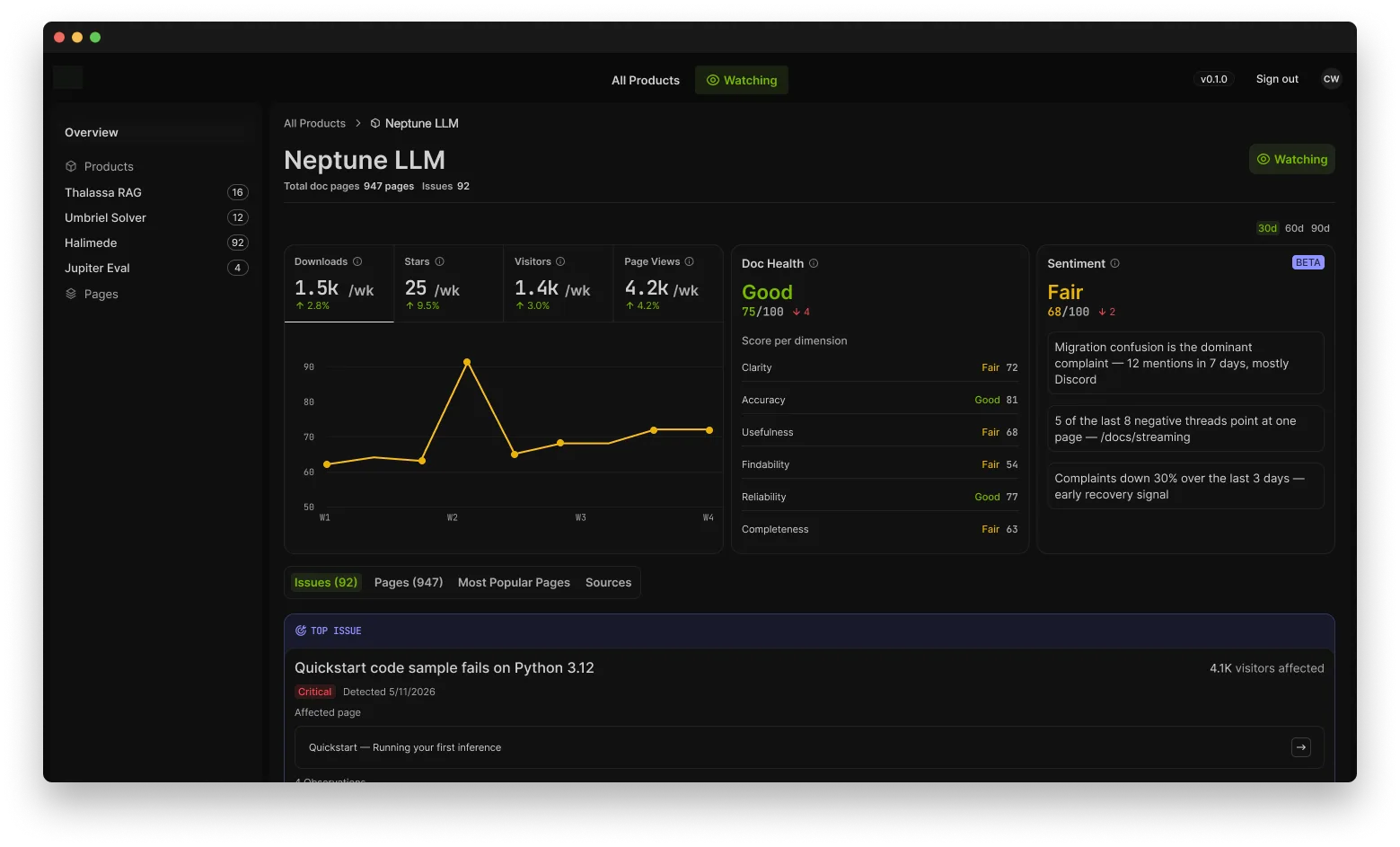

A product leader inside one of the world's largest semiconductor and AI computing companies had been making the same case for years: developer-facing documentation across the portfolio was failing the developers who depend on it. They had no evidence to prove it. Too small for the seven-figure consultancies, too low-priority for internal shared services, the work was attempted in the margins for more than eighteen months: never staffed, never finished, never killed.
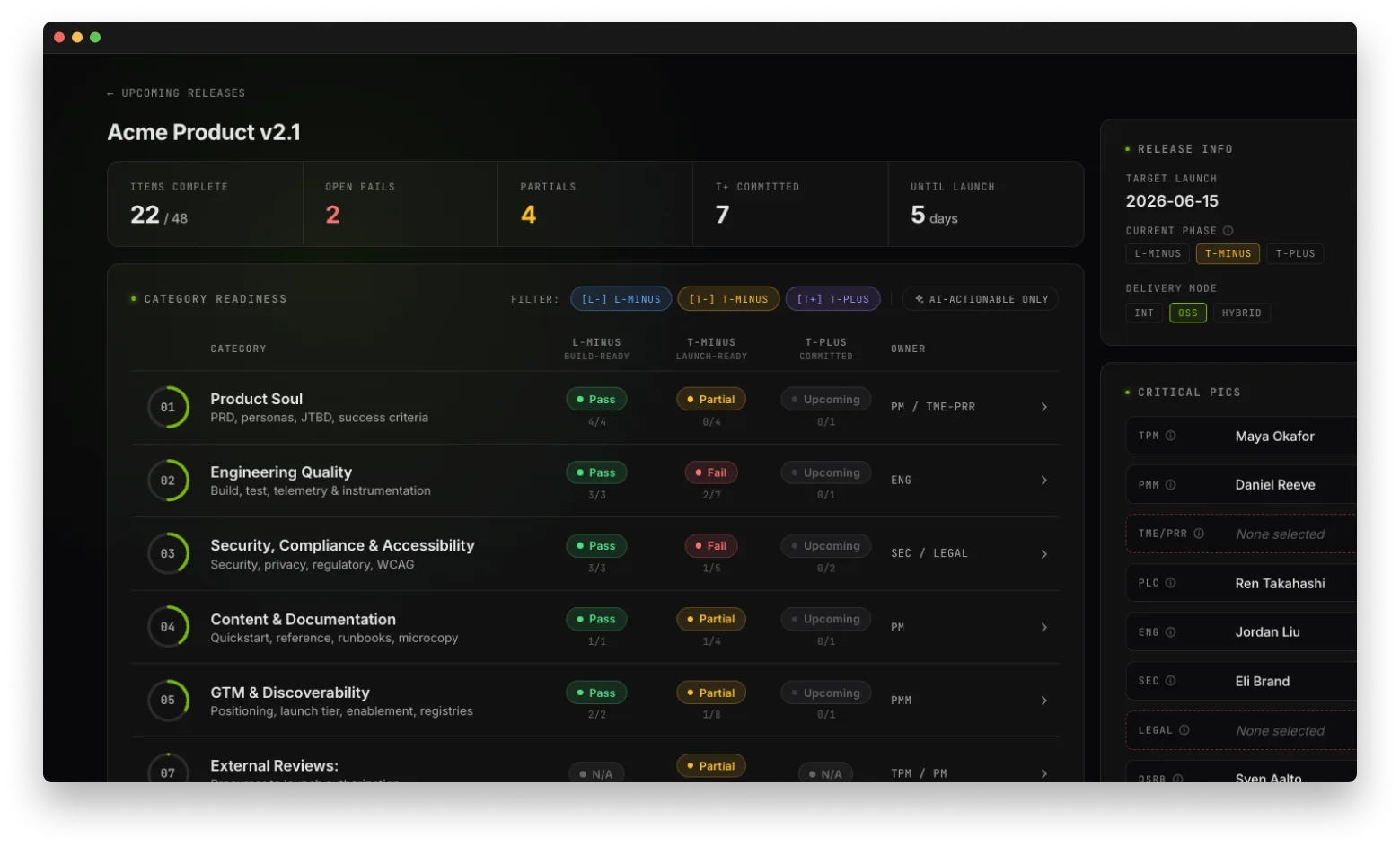
The deeper problem was cultural. Speed was the point: idea on Monday, release on Friday, often with no PRD, no personas, no jobs-to-be-done. But products that ship half-baked get relaunched, and launching three times is not fast. Debt piled up behind every release: deprecated platforms, stale docs, developers left holding the bag. Teams knew they were getting dinged for it. Nothing forced it to surface.
And the asset at risk is the company's most valuable one: the reputation of its platform among developers. You cannot fix what you cannot measure.
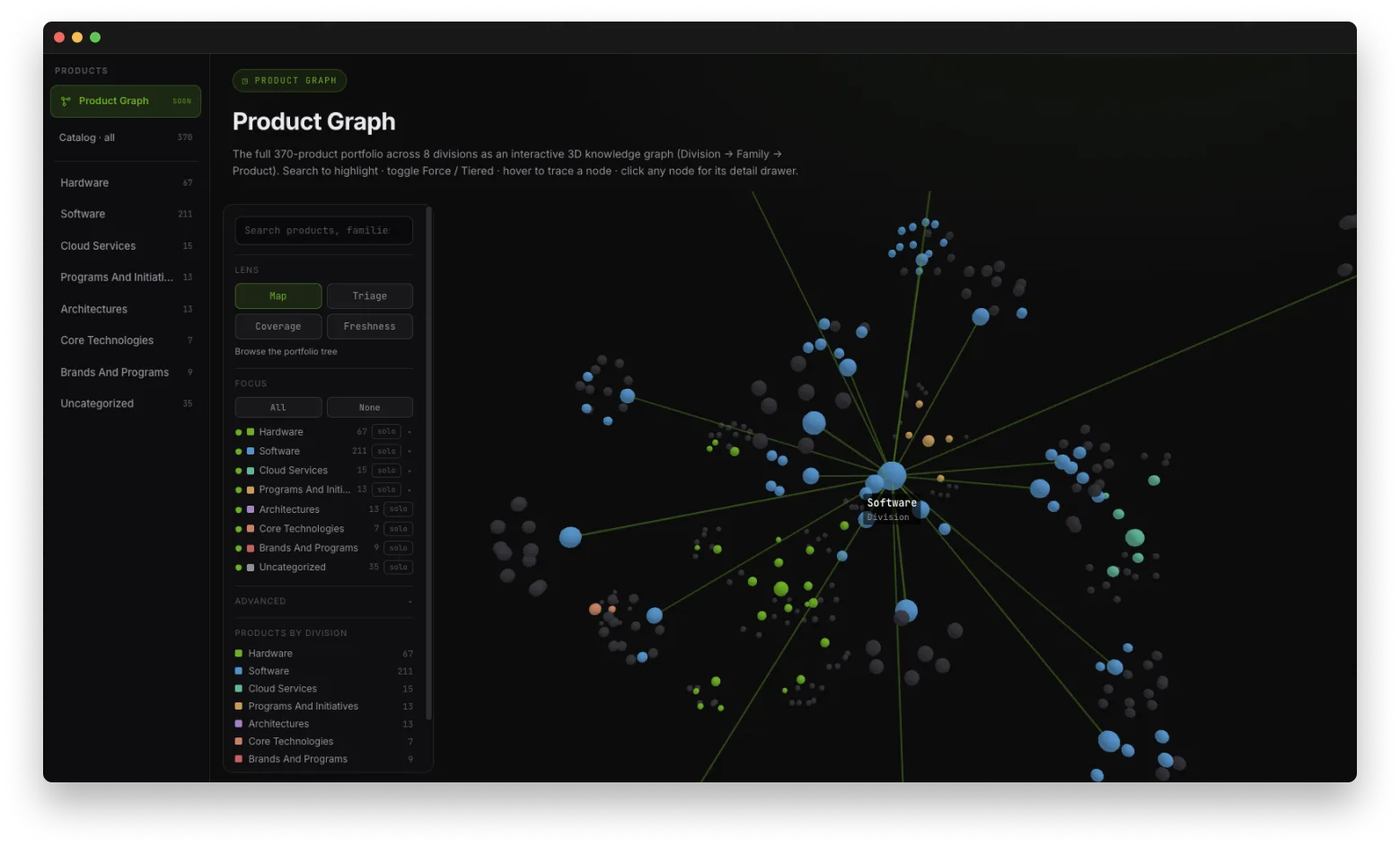
Two kinds of debt were compounding against it. Product debt: the readiness work promised every release and delivered in almost none. Organizational debt: what teams knew about product health, trapped in nine disconnected systems and in people's heads. Neither is a technology problem, and neither surfaces on its own.